On 5 May 2026, the arbitral tribunal (the “Tribunal”) in the ICSID proceedings brought by Banesco Holding Latinoamérica, S.A. (“BHL”) and Banesco (Panamá), S.A. (“Banesco Panama”) against the Republic of Panama (“Panama”) rendered its final award (the “Award”). The Tribunal, composed of Franz X. Stirnimann Fuentes as President, Rafael Rincón Ordóñez, and Alvaro Galindo, accepted jurisdiction over BHL’s claims, declined jurisdiction over Banesco Panama’s claims, and dismissed BHL’s claims on the merits.[1]
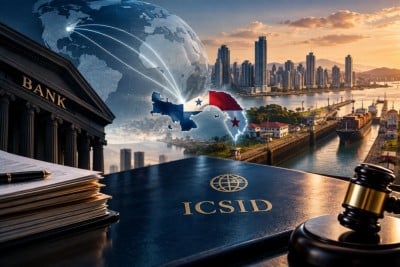 The dispute arose from Panama’s administration and enforcement of public-works surety bonds and was brought under the Agreement for the Promotion and Reciprocal Protection of Investments between the Kingdom of Spain and the Republic of Panama (the “Spain-Panama BIT”). BHL claimed that Panama’s conduct breached the fair and equitable treatment (“FET”) obligation in Article IV(1) and the prohibition on arbitrary interference with investments in Article IV(2). The key merits question was whether prolonged delays, notification failures, and uncertainty surrounding the duration of the bonds went beyond administrative shortcomings and amounted to internationally wrongful conduct.[2]
The Award is particularly useful because it brings clarity to three recurring issues in investment arbitration. First, it separates the question of whether an investment is protected from the question of whether a local company has standing to invoke ICSID jurisdiction. Second, it treats regulatory ambiguity as part of the context in which FET is assessed, rather than as an automatic defence. Third, it distinguishes the cumulative assessment of conduct under FET from the separate requirements of a composite act under Article 15 of the International Law Commission’s Articles on Responsibility of States for Internationally Wrongful Acts (the “ILC Articles on State Responsibility”).[3]
Facts
BHL, a company incorporated in Spain, owned all the shares in Banesco Panama, which in turn owned all the shares in the Panamanian insurer Banesco Seguros S.A. (“Banesco Seguros”). Banesco Seguros, rather than either BHL or Banesco Panama directly, issued the bonds underlying the dispute. Across 35 public-works projects (the “35 Cases”), it issued 35 advance-payment bonds and 35 performance bonds – 70 bonds in total – with an aggregate insured amount of approximately USD 45.6 million. The bonds were issued between 2014 and 2017.[4]
The 35 Cases followed a broadly recurring sequence: contractor non-performance; delay before the contracting authority terminated the underlying works contract; administrative and judicial challenges; and, eventually, enforcement or settlement of the relevant bond. BHL alleged that the authorities waited too long, failed to obtain endorsements extending bonds, failed to notify Banesco Seguros properly, and sought to enforce bonds that had already expired under BHL’s interpretation of Panamanian law.[5]
A central issue was how Panama’s public-procurement regime, and in particular Law 48 of 2011 (“Law 48”), affected the duration of the bonds. BHL argued that the bonds expired after fixed statutory periods, whereas Panama took the position that they remained effective until the secured obligations had been discharged or the underlying contracts had been finally resolved. In 2023 and 2024, the Supreme Court of Justice of Panama (the “Supreme Court”) issued decisions supporting Panama’s interpretation, while Banesco Seguros continued to contest individual measures through the domestic legal system.[6]
BHL and Banesco Panama sought declarations that Panama had breached the treaty, an end to the allegedly arbitrary conduct, protection against similar future measures, and at least USD 13,568,317 in damages, plus interest and costs. The damages figure was considerably lower than the approximately USD 45.6 million aggregate insured amount of the 70 bonds involved in the dispute, because the latter represented the combined value of the bonds rather than the amount claimed as compensation.[7]
Issues
The main jurisdictional issue was whether Banesco Panama, despite being incorporated in Panama, could be treated as a foreign investor under Article 25(2)(b) of the Convention on the Settlement of Investment Disputes between States and Nationals of Other States (the “ICSID Convention”) because it was controlled by BHL. The Tribunal also considered whether BHL had presented a treaty claim rather than a dispute arising solely under Panamanian law, and whether defects in notice, the status of seven of the 35 Cases, or related domestic proceedings limited its jurisdiction over any part of BHL’s claims.[8]
The merits analysis focused on whether Panama’s conduct was arbitrary or procedurally unfair, defeated legitimate expectations, or fell short of the required standards of transparency and consistency. The Tribunal also considered whether the challenged measures, viewed together, could establish a cumulative FET breach and, separately, whether the 35 Cases amounted to a composite act under Article 15 of the ILC Articles on State Responsibility.[9]
Holding
The Tribunal concluded that Banesco Panama lacked standing to bring claims before ICSID in its own name. Foreign control by BHL was not in dispute, but that alone was insufficient under Article 25(2)(b), which also requires an agreement to treat the locally incorporated company as foreign for Convention purposes.[10] The Tribunal found that the Spain-Panama BIT and the surrounding circumstances did not establish such an agreement. BHL’s claims, however, remained within the Tribunal’s jurisdiction, and Panama’s remaining objections to those claims failed.[11]
On the merits, the Tribunal found that the challenged measures did not breach the FET standard in Article IV(1), whether considered individually or together, and did not amount to arbitrary interference under Article IV(2). It also rejected the argument that the 35 Cases formed a composite act. Having found no breach of the treaty, the Tribunal did not proceed to assess BHL’s damages claim.[12] On costs, BHL and Banesco Panama were ordered to contribute USD 900,000 towards Panama’s legal fees and to bear half of the arbitration costs.[13]
Reasoning
A. Jurisdiction Ratione Personae: Protection of an Investment Does Not Confer Foreign-Investor Status
Article 25(2)(b) of the ICSID Convention allows a locally incorporated company to be treated as a national of another Contracting State where two conditions are met: the company is under foreign control, and the parties have agreed to treat it as foreign for purposes of the Convention. The Tribunal regarded these requirements as cumulative. BHL’s control of Banesco Panama was undisputed; the difficulty was that the necessary agreement on foreign nationality had not been established.[14]
The Tribunal therefore rejected the argument that the required agreement could be derived from Articles I(2) and XII of the Spain-Panama BIT read together. Article I(2) extends treaty protection to certain investments made through locally incorporated companies effectively controlled by investors of the other Contracting Party, while Article XII provides for investor-State arbitration. In the Tribunal’s view, however, those provisions did not amount to an unequivocal agreement to treat Banesco Panama itself as a foreign national for ICSID purposes. The Tribunal also emphasised that Article I(2) concerns an “investment”, not an “investor”.[15]
The Tribunal’s reasoning also reflects a broader distinction between consent to arbitration and an agreement to treat a local company as foreign under Article 25(2)(b). As Schreuer’s Commentary explains, and as the Tribunal noted, a general treaty offer to arbitrate does not, by itself, establish that the host State has agreed to accord foreign nationality to a particular locally incorporated company simply because it is foreign controlled.[16]
The Tribunal did not suggest that Article 25(2)(b) requires any particular form of words. In Amco Asia Corp. et al. v. Republic of Indonesia, the tribunal found the necessary agreement even though the parties had not used a formal nationality clause. What mattered was that the host State had approved investment arrangements that identified the local company as foreign controlled and included an ICSID arbitration clause. The Tribunal distinguished Amco because there was no comparable evidence that Panama had agreed to treat Banesco Panama as foreign for purposes of the Convention.[17]
Aguas del Tunari, S.A. v. Republic of Bolivia offers a useful comparison from a treaty-drafting perspective. There, the Netherlands-Bolivia BIT contained a control-based nationality provision that the tribunal treated as the agreement required by Article 25(2)(b), allowing a locally incorporated company to be treated as a national of the other Contracting State where the specified foreign control existed.[18] The Spain-Panama BIT was drafted differently. It extended treaty protection to certain investments held through locally incorporated companies, but did not confer foreign-investor status on the local company itself. The Tribunal drew a similar contrast with MTD v. Chile, where the applicable treaty expressly addressed host-State companies controlled by investors of the other Contracting State.[19]
The point, therefore, is not that locally incorporated subsidiaries are excluded from Article 25(2)(b). A foreign-controlled host-State company may qualify for ICSID jurisdiction, but foreign control alone is not enough. The relevant consent instruments must also establish, expressly or through sufficiently clear circumstances, the separate agreement to treat that company as foreign for purposes of the Convention.[20]
B. Jurisdiction Turned on the Nature of the Claim, Not Proof of a Breach
Panama argued that the dispute was essentially one of Panamanian bond law rather than a treaty dispute. The Tribunal rejected that characterisation at the jurisdictional stage, drawing a distinction between the existence of a treaty claim and whether that claim could ultimately be proved. BHL challenged the exercise of public powers under Panama’s procurement framework and alleged that the way those powers had been exercised breached international standards. Those allegations were capable of falling within the Spain-Panama BIT; whether they were substantiated was a question for the merits.[21]
The Tribunal took a similar approach to Case No. 35. Although the specific enforcement resolution was issued only after the notice of dispute, the notice had already identified the broader dispute concerning the administration, validity, and enforcement of the bonds. The Tribunal therefore treated the later resolution as a development within an existing dispute, rather than as a new dispute requiring a fresh negotiation period.[22]
These jurisdictional findings were expressly preliminary and did not prejudge whether the alleged pattern of conduct could ultimately be established on the merits. That question was left for the Tribunal’s substantive analysis.[23]
C. Regulatory Ambiguity Did Not End the FET Inquiry
BHL and Panama disagreed over whether Article IV(1) imposed an autonomous FET standard or instead reflected the customary international minimum standard. The Tribunal considered that distinction to be of limited practical importance on the facts and did not resolve it definitively. Instead, it assessed Panama’s conduct by reference to the principal elements invoked by BHL, including arbitrariness and unreasonableness, due process and procedural fairness, legitimate expectations, good faith, consistency, and transparency. The Tribunal also emphasised that arbitrariness is assessed objectively, but that not every administrative error or imperfect decision rises to the level of a treaty breach.[24]
Against that background, the uncertainty surrounding Panama’s domestic legal framework became an important part of the analysis. The Tribunal found genuine ambiguity in the post-2011 surety regime, particularly in the interaction between statutory provisions, regulations, model bond forms, and general surety law. Both BHL’s and Panama’s interpretations therefore had a plausible legal basis. In those circumstances, the Tribunal declined to place itself in the position of a court of appeal deciding which interpretation of Panamanian law was ultimately correct.[25]
That did not, however, end the FET inquiry. A legally defensible interpretation of domestic law could still be applied in a manner that was arbitrary, procedurally unfair, or inconsistent with legitimate expectations. The relevant question was therefore not simply which interpretation of Panamanian law was more persuasive, but whether the way Panama’s authorities implemented their position across the 35 Cases crossed the treaty threshold.[26]
D. Delay and Procedural Defects Did Not Reach the Treaty Threshold
The Tribunal acknowledged that some of the administrative proceedings had lasted for years. At the same time, Law 48 did not prescribe a specific deadline for issuing contract-termination decisions, and the relevant procedures could involve investigation, notification, administrative appeals, and, in some Cases, judicial review. The Tribunal did not consider every delay justified and accepted that some may have reflected negligence or institutional shortcomings. Even so, BHL had not shown that, viewed in their factual context, the delays were so disconnected from the applicable procedures as to amount to arbitrary conduct.[27]
The complaints concerning endorsements and notification were rejected on similar grounds. The relationship between the special public-procurement regime and general surety law was genuinely open to debate. In particular, the 30-day clause in the model bond required the contractor to extend the bond before expiry; it did not impose a 30-day deadline on the beneficiary authority to enforce it. Circular No. 20-2021.LEG likewise called for timely endorsements and notification, but it was issued after much of the conduct at issue and did not make compliance a condition of the bond’s validity.[28]
The Tribunal also attached importance to the remedies available to Banesco Seguros. It had access to administrative reconsideration, review before the Administrative Court for Public Procurement, and judicial review before the Supreme Court, and it made use of those procedures. Although the review process was slow, the Tribunal considered the availability and operation of those remedies inconsistent with a denial of due process.[29]
E. Legitimate Expectations and Transparency Did Not Establish Liability
On legitimate expectations, the Tribunal looked for a specific representation or commitment by the State, or a sufficiently clear and established legal framework on which BHL could reasonably have relied. BHL identified no assurance from Panama that the bonds would automatically expire once its preferred statutory periods had elapsed. Given the ambiguity of the governing regime from the outset, the Tribunal found that BHL could not elevate its preferred interpretation of domestic law into a protected expectation. It also treated the Supreme Court’s 2023 and 2024 decisions as reasonable clarifications of the existing legal framework, rather than retroactive changes that imposed new obligations.[30]
The transparency claim failed for similar reasons. The Tribunal did not regard the FET standard as requiring perfect or entirely unambiguous legislation. The relevant statutes, regulations, and model bond forms were publicly available, the authorities applied an identifiable legal position, and the framework was progressively clarified through administrative and judicial decisions. Although the Tribunal accepted that greater regulatory clarity would have been preferable, disagreement with the authorities’ interpretation did not, without more, render the legal regime insufficiently transparent for treaty purposes.[31]
F. The Tribunal Distinguished Cumulative FET from a Composite Act
The Award considered two distinct theories for assessing a series of measures together. First, relying on El Paso, BHL argued that conduct which might not breach the FET standard when viewed individually could nevertheless amount to a violation when considered cumulatively. Second, BHL argued that the conduct across the 35 Cases formed a composite act within the meaning of Article 15 of the ILC Articles on State Responsibility. The Tribunal treated these as separate legal inquiries.[32]
As to cumulative FET, the Tribunal emphasised that aggregation does not automatically turn a collection of individually insufficient complaints into a treaty breach. The delays had explanations linked to the applicable procedures, the procedural shortcomings arose against a genuinely ambiguous legal framework, no protected legitimate expectation had been established, and the transparency claim had failed. Viewed together, those circumstances still did not cross the FET threshold.[33]
The composite-act argument raised a different question: whether the conduct across the 35 Cases was sufficiently connected to form a single wrongful series for purposes of Article 15. The Tribunal accepted that such unity need not result from a conspiracy, a deliberate State plan, or a formally adopted policy. It could instead emerge from a sustained administrative practice, a common institutional failure, or the systematic application of the same legal interpretation. Similarity or repetition alone, however, was insufficient.[34]
The Tribunal found that the necessary connection had not been established. The recurring features of the 35 Cases could largely be explained by the fact that they arose under the same legislation and procedures and involved the same guarantor. There was insufficient evidence that enforcement of the bonds formed part of a common revenue-generating strategy, and no coordinating mechanism or common directive linked the conduct of the different authorities. BHL also failed to identify the first act in the alleged series, an issue relevant under Article 15 to determining when a composite act begins and how long it continues. Although deliberateness or coordination was not, in itself, a formal prerequisite, the absence of evidence of a deliberate, coordinated, or investor-directed pattern reinforced the Tribunal’s conclusion that the required unity was missing.[35]
The Tribunal nevertheless recognised a recurring pattern of administrative shortcomings, including delays and notification failures. Its conclusion was therefore not that the Cases had nothing in common, but that those common deficiencies were insufficient either to establish a cumulative FET breach or to constitute the legally connected series required for a composite act under Article 15.[36]
G. The Costs Order Reflected the Mixed Outcome
Under Rule 52 of the 2022 ICSID Arbitration Rules, the Tribunal considered the parties’ relative success, their conduct during the proceedings, the complexity of the issues, and the reasonableness of the costs claimed. Although Panama prevailed on the merits, BHL had successfully resisted several important jurisdictional objections, and the Tribunal did not regard the claims as frivolous, particularly given the ambiguity of the underlying legal framework. It therefore awarded Panama only partial reimbursement of its legal fees rather than shifting its costs in full to BHL and Banesco Panama.[37]
Conclusion
The Award underscores the importance of distinguishing between the protection of an investment and the standing of the investor that seeks to invoke ICSID jurisdiction. A treaty may protect investments made through a foreign-controlled local company without giving that company standing to arbitrate in its own name. Under Article 25(2)(b), foreign control must be accompanied by an agreement to treat the local company as a national of another Contracting State. Amco and Aguas del Tunari illustrate that whether such an agreement exists depends on the wording of the relevant instruments and the circumstances in which consent was given.[38]
On the merits, the Award shows that regulatory ambiguity is relevant to the FET analysis, but does not shield a State from treaty liability. A legally plausible interpretation of domestic law may still be applied arbitrarily, unfairly, or in a manner inconsistent with protected expectations. At the same time, where the domestic framework genuinely supports competing interpretations, the claimant must still establish that the State’s implementation crossed the international-law threshold. Here, the Tribunal acknowledged significant delays, notification failures, and regulatory uncertainty, but found that those shortcomings did not amount to arbitrariness, a denial of due process, frustration of legitimate expectations, or a lack of transparency sufficient to breach Article IV.[39]
Finally, the Award draws a useful distinction between two forms of aggregation. Measures may be considered cumulatively under FET, but aggregation does not by itself turn individually insufficient allegations into a treaty breach. A composite-act claim under Article 15 raises a separate question: whether the relevant acts or omissions are sufficiently connected to form a single wrongful series. The Tribunal found recurring shortcomings in Panama’s administration, but concluded that they neither crossed the FET threshold when considered together nor possessed the degree of connection required to constitute the composite act alleged by BHL.[40]
[1] Banesco Holding Latinoamérica, S.A. and Banesco (Panamá), S.A. v. Republic of Panama, ICSID Case No. ARB/23/41, Award, 5 May 2026, ¶ 635(1)-(3) (unofficial English translation).
[2] Agreement for the Promotion and Reciprocal Protection of Investments between the Kingdom of Spain and the Republic of Panama, signed 10 November 1997, Art. IV(1)-(2); Banesco Holding, ¶¶ 585-591, 635(2).
[3] Banesco Holding, ¶¶ 118-121, 319, 339-343, 568-583.
[4] Banesco Holding, ¶¶ 48, 286-288.
[5] Banesco Holding, ¶¶ 259-262, 288-290.
[6] Banesco Holding, ¶¶ 242-245, 284, 290, 497, 557.
[7] Banesco Holding, ¶¶ 10, 597.
[8] Convention on the Settlement of Investment Disputes between States and Nationals of Other States, opened for signature 18 March 1965, entered into force 14 October 1966, Art. 25(2)(b); Banesco Holding, ¶¶ 106-108, 138-155, 212-248.
[9] Banesco Holding, ¶¶ 312-323, 332-341, 568-583.
[10] ICSID Convention, Art. 25(2)(b).
[11] Banesco Holding, ¶¶ 111-128, 155, 227, 233, 246-250.
[12] Banesco Holding, ¶¶ 568-583, 598-599, 635(2)-(3).
[13] Banesco Holding, ¶¶ 631-635.
[14] ICSID Convention, Art. 25(2)(b); Banesco Holding, ¶¶ 103-121.
[15] Spain-Panama BIT, Arts. I(2), XII; Banesco Holding, ¶¶ 115-121.
[16] S. W. Schill et al. (eds.), Schreuer’s Commentary on the ICSID Convention (3rd edn., 2022), ¶ 1298; Banesco Holding, ¶ 118.
[17] Amco Asia Corp. et al. v. Republic of Indonesia, ICSID Case No. ARB/81/1, Decision on Jurisdiction, 25 September 1983, ¶ 14; Banesco Holding, ¶ 119.
[18] Agreement on Encouragement and Reciprocal Protection of Investments between the Kingdom of the Netherlands and the Republic of Bolivia, signed 10 March 1992, Art. 1(b)(iii); Aguas del Tunari, S.A. v. Republic of Bolivia, ICSID Case No. ARB/02/3, Decision on Respondent’s Objections to Jurisdiction, 21 October 2005, ¶¶ 280, 285.
[19] MTD Equity Sdn. Bhd. and MTD Chile S.A. v. Republic of Chile, ICSID Case No. ARB/01/7, Award, 25 May 2004, ¶ 94; Banesco Holding, ¶¶ 120, 126-127.
[20] Banesco Holding, ¶¶ 114-121, 127-128.
[21] Banesco Holding, ¶¶ 138-155.
[22] Banesco Holding, ¶¶ 212-227.
[23] Banesco Holding, ¶¶ 233, 246.
[24] Banesco Holding, ¶¶ 312-322.
[25] Banesco Holding, ¶¶ 342-355, 497, 588, 595.
[26] Banesco Holding, ¶¶ 342-344.
[27] Banesco Holding, ¶¶ 513-525.
[28] Banesco Holding, ¶¶ 531-541.
[29] Banesco Holding, ¶¶ 536, 540.
[30] Banesco Holding, ¶¶ 543-557.
[31] Banesco Holding, ¶¶ 558-564.
[32] El Paso Energy International Company v. Argentine Republic, ICSID Case No. ARB/03/15, Award, 31 October 2011, ¶ 518; Intl. Law Commission’s Arts. on the Responsibility of States for Internationally Wrongful Acts, Art. 15; Banesco Holding, ¶¶ 319, 568-575.
[33] Banesco Holding, ¶¶ 568-572.
[34] Banesco Holding, ¶¶ 339-341, 574-577.
[35] Banesco Holding, ¶¶ 576-583.
[36] Banesco Holding, ¶¶ 591-598.
[37] 2022 ICSID Arbitration Rules, Rule 52(1); Banesco Holding, ¶¶ 601, 624-635.
[38] Banesco Holding, ¶¶ 114-121, 126-128.
[39] Banesco Holding, ¶¶ 342-344, 588-597.
[40] Banesco Holding, ¶¶ 568-583, 591-598, 635(2).