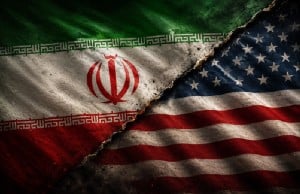
More than four decades after the Tehran hostage crisis, arbitration may offer Iran a legal pathway to challenge the United States’ latest military campaign. On 28 February 2026, the United States, together with Israel, launched a large-scale military operation against the Islamic Republic of Iran under the name “Operation Epic Fury”.[1] The United States has […]
Third-Party Funding and Confidentiality in Investment Arbitration: Kappes v. Guatemala

Third-party funding is increasingly common in investment arbitration. It can give investors access to treaty claims, but it may also raise issues of conflicts of interest, confidentiality, security for costs and adverse costs exposure.[1] The procedural orders in Daniel W. Kappes and Kappes, Cassiday & Associates v. Republic of Guatemala are useful because they address […]
Investment Arbitration in Mexico: Why an Over USD 2.1 Billion Claim Failed

The arbitration in Espíritu Santo Holdings, LP and L1bre Holding, LLC v. United Mexican States concerned a digital taximeter project in Mexico City and claims exceeding USD 2.1 billion.[1] On 26 March 2026, the tribunal reportedly dismissed all claims in favour of Mexico.[2] The case arose from an investment in Servicios Digitales Lusad, S. de […]
New 2026 ICC Arbitration Rules

The International Chamber of Commerce (“ICC”) has approved a revised version of its Rules of Arbitration, which will enter into force on 1 June 2026 (“2026 ICC Rules”), replacing the 2021 Rules of Arbitration (“2021 ICC Rules”). The revisions are designed to improve efficiency, clarity and user-friendliness, ensuring ICC arbitration remains responsive to global user […]
Arbitration in Próspera: An Arbitration Utopia?

Arbitration is usually a creature of contract. Parties arbitrate because they have agreed to do so. Próspera ZEDE departs from that model by embedding arbitration into its legal architecture, making it the default mechanism for a significant category of disputes even when the parties’ contract is silent. It also creates two distinct tracks: a private, […]