
In a final award dated 22 September 2026 (the “Award”), the arbitral tribunal in the dispute between Tullow Ghana Limited (“TGL”) and the Republic of Ghana (“Ghana”) rejected TGL’s contractual challenge to a USD 393.1 million tax-and-penalty assessment. The London-seated arbitration proceeded under the 2021 Rules of Arbitration of the International Chamber of Commerce (“ICC”) […]
What the ICC’s 2025 Statistics Tell Us About the Direction of International Arbitration
The ICC Dispute Resolution 2025 Statistics are more than an annual scorecard. They show a global, institutionally active arbitration system that is also becoming increasingly regional and efficiency-focused. Questions of diversity, procedure and award quality are also greatly influencing the arbitration system. Nowadays, the International Chamber of Commerce (“ICC”) represents the interests “of more than […]
Key Changes in the 2026 ICC Arbitration Rules

The International Chamber of Commerce (the “ICC”) has now released the newest iteration of its arbitration rules, the 2026 ICC Arbitration Rules (the “2026 Rules”), which will enter into force on 1 June 2026. The 2026 Rules are evolutionary rather than revolutionary. The ICC has not fundamentally altered the structure of ICC arbitration, but it […]
New 2026 ICC Arbitration Rules

The International Chamber of Commerce (“ICC”) has approved a revised version of its Rules of Arbitration, which will enter into force on 1 June 2026 (“2026 ICC Rules”), replacing the 2021 Rules of Arbitration (“2021 ICC Rules”). The revisions are designed to improve efficiency, clarity and user-friendliness, ensuring ICC arbitration remains responsive to global user […]
Key Takeaways from 2024 LCIA and ICC Arbitration Statistics
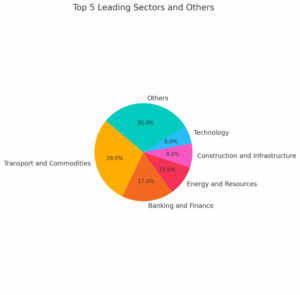
The latest statistics from the London Court of International Arbitration (LCIA) and the International Chamber of Commerce (ICC) provide valuable insights into evolving trends in global dispute resolution. Both institutions continue to reflect the internationalisation of arbitration, growing involvement from emerging markets, increased attention to tribunal composition, and greater procedural efficiency in handling complex, high-value […]