On 15 November 2021, the Panel of Recognised International Market Experts in Finance (“P.R.I.M.E”) launched its revised P.R.I.M.E. Finance Arbitration Rules (the “2022 P.R.I.M.E Rules”), which came into force as of 1 January 2022, superseding the previously applicable 2016 P.R.I.M.E Finance Arbitration Rules (the “2016 P.R.I.M.E Rules”). The key changes introduced by the 2022 P.R.I.M.E. Rules […]
The New ICSID Arbitration Rules

The ICSID Convention, Regulations and Rules were adopted in 1967 and were later amended four times, with the last amendment entering into force in April 2006. In October 2016, the ICSID launched a new amendment process calling for Member States, and later the public, to suggest topics to be considered for changes. According to the […]
Aceris Law Again Highly Recommended as Among the Best Law Firms for International Arbitration in 2022
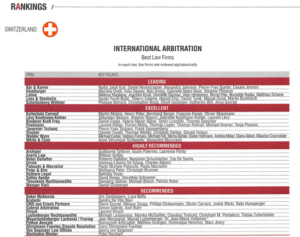
Aceris Law is pleased to announce that it has again been ranked among the best law firms in the field of international arbitration. In particular, the Leader’s League has highly recommended Aceris Law in the category of best law firms in the field of international arbitration in Switzerland for 2022, and it has also highly […]
Umbrella Clauses in Investment Arbitration

In investment arbitration, an umbrella clause can constitute an advantage for investors, protecting investments by placing obligations entered into by a host State of investment under the protective “umbrella” of an international treaty. By linking the violation of local law to the violation of a Bilateral Investment Treaty (“BIT”), contract claims may in particular be […]
Costs of ICSID Annulment Proceedings
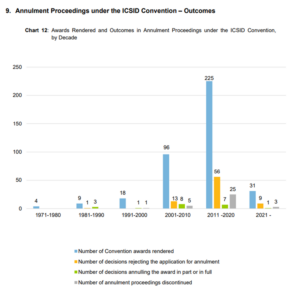
Pursuant to Article 53 of the ICSID Convention, ICSID awards are binding on the parties and “shall not be subject to any appeal or any other remedy except those provided for in this Convention”. As correctly stated by the ad hoc committee in the Standard Chartered Bank v. Tanzania Electric Supply Company case, this “Article […]