International arbitrator immunity is typically provided for in domestic legal regimes. As noted by commentators, “almost all contemporary national arbitration regimes provide international arbitrators with expansive statutory or common law immunities from civil claims based on the performance of their adjudicative functions”[1] for the reason that “[Arbitrators] must of necessity be uninfluenced by any fear of consequences for their acts”[2]. Most institutional arbitration rules offer even broader immunity[3].
8 October 2015, Dubai Court of Cassation ruled on a Meydan Group LLC case[4] which gave a glimpse of the application of statutory immunity of international arbitrators in the UAE. Departing from a combined reading of Art. 24 of the DIAC Statute Rules[5] and Art. 40 of the DIAC Rules of Arbitration[6], the Court established that the limit of international arbitrators’ immunity is when they commits a fundamental error which should be defined as a failure to comply with unambiguous legal principles or ignore clear-cut facts.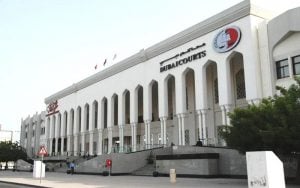
This ruling on international arbitrator immunity is unfortunate, since what constitutes unambiguous legal principles or clear-cut facts is itself often subject to debate. Although Dubai remains an arbitration-friendly jurisdiction, this represents a step backwards in terms of international arbitrator immunity.
[1] Gary B. Born , International Commercial Arbitration (Second Edition), 2nd edition, Chapter 13: Rights and Duties of International Arbitrators p.2026, https://www-kluwerarbitration-com.etna.bib.uvsq.fr/CommonUI/document.aspx?id=kli-ka-born-2014-ch13#a0002
[2] Babylon Milk & Cream Co. v. Horvitz, 151 N.Y.S.2d 221, 224 (N.Y. Sup. Ct. 1956). Similar statement: Tamari v. Conrad, 552 F.2d 778, 780 (7th Cir. 1977); Lundgren v. Freeman, 307 F.2d 104 (9th Cir. 1962). “If their decisions can thereafter be questioned in suits brought against them by either party, there is a real possibility that their decisions will be governed more by fear of such suits than by their own unfettered judgment as to the merits of the matter they must decide.”
[3] Article 40 of the 2012 ICC Arbitration Rules; Article 16 of the revised 2010 UNCITRAL Rules;
[4] Case No. 212/2014 – Meydan Group LLC v. Alexis Mourre, see: https://kluwerarbitrationblog.com/2016/03/28/the-liability-of-arbitrators-in-the-uae-quod-novi-sub-sole/
[5] “Neither the Centre nor any of its employees, members of the Board of Trustees, its Committees or members of any dispute settlement panel shall be held liable for any unintentional error in their work related to the settlement of disputes by the Centre.”
[6] “[no] member of the Tribunal shall be liable to any person for any act or omission in connection with the arbitration.”