
An arbitration clause in a contract is generally regarded as an autonomous agreement that may survive the termination of the contract that contains it. This presumption is often referred as “separability” or the “doctrine of separability”, according to which an arbitration clause is a “separate contract” whose validity and existence are independent from the substantive […]
Bank Guarantees and Arbitration: Resisting a Wrongful Call?

Bank Guarantees are a common feature of international construction contracts. Bank Guarantees are typically used as a security for one party’s (usually the contractor’s) performance of its contractual obligations. Bank Guarantees frequently play a central role in construction disputes as well – either as an important aspect of background facts of the dispute or as […]
Aceris Law Successfully Resolves ICC Arbitration Involving the Cryptocurrency Industry

The international arbitration boutique Aceris Law is pleased to announce that it has successfully resolved another dispute for another client, this time an arbitration concerning the cryptocurrency industry. Cryptocurrency arbitrations remain rare, but are likely to grow over the coming years as blockchain-related technologies become more mainstream. Cryptocurrencies are digital assets that serve as a […]
The United States District Court for the District of Columbia Confirms Enforcement of the Award in Micula
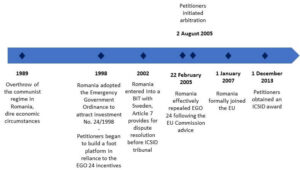
On 11 September 2019, the District Court of Columbia confirmed a 2013 ICSID award in favour of Mr. Ioan Micula and the companies in which he had invested. Romania repealed economic incentives the Micula brothers had relied upon when making investments in 1998. In 2013, an ICSID arbitral tribunal rendered an award in favour of […]
Confidentiality in International Arbitration: Obligations Under English, French and U.S. Laws

Confidentiality is often regarded as one of the core advantages of international arbitration. For instance, confidentiality reduces disclosure of sensitive information and the influence of public opinion.[1] Confidentiality is to be distinguished from privacy, which concerns the fact that only parties to the arbitration agreement may attend hearings and participate in arbitral proceedings.[2] Privacy prevents interference from […]