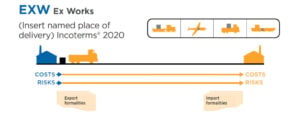
The Incoterms are a set of commercial/trade rules established by the International Chamber of Commerce (“ICC”) that are used in international sale contracts.[1] The Incoterms are not mandatory rules – for them to receive legal effect, they must be explicitly incorporated by the parties into their contract. In the following paragraphs, after outlining the classification […]
Aceris Law’s Client Succeeds in ICC Arbitration under French Law in the Aviation Industry

Aceris Law is pleased to announce that it has assisted another client in winning another ICC arbitration, this time in the aviation industry. While identifying details of the award remain confidential, the dispute, which was subject to French law, concerned remuneration of the work of a third-party consultant who had assisted in the successful sale […]
Arbitration in Afghanistan

Arbitration in Afghanistan is governed by the Commercial Arbitration Law of Afghanistan, published on 30 January 2007 (Official Gazette No. 913)(the “Arbitration Law“). The purpose of the Arbitration Law, which was part of a wider legal reform aimed at attracting foreign investment and making Afghanistan a more business-friendly environment, was to facilitate and encourage prompt, […]
Coronavirus (COVID-19) and Courts: Moving from Litigation to Arbitration?

The global difficulties caused by the coronavirus (COVID-19), various State measures imposing restrictions on the movement of people, social distancing and complete lockdowns, while necessary to protect health, are inevitably having an impact on litigation in national courts, globally. In certain countries courts have had to limit, or to even entirely close, their operations due […]
Virtual Hearings in International Arbitration

The spread of the COVID-19 pandemic and the restrictive measures (travel restrictions, lockdowns, etc.) imposed by many governments have made it impossible for many parties, their counsel, witnesses and arbitrators from different part of the world to attend in-person hearings. Thus, tribunals and parties to ongoing proceedings typically have a choice between adjourning hearings, agreeing […]