
Fair and equitable treatment is a prominent standard of protection in investment arbitration disputes, which is present in most bilateral investment treaties (“BITs”).[1] The standard has evolved in post-World War II treaties. The 1948 Havana Charter for an International Trade Organization is said to be the first treaty to include “just and equitable treatment” for […]
2021 International Arbitration Survey – Adapting Arbitration to a Changing World
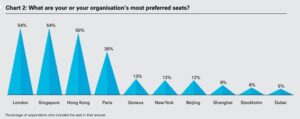
The twelfth empirical study of the School of International Arbitration, Queen Mary University of London, in partnership with White & Case LLP, the 2021 International Arbitration Survey (“International Arbitration Survey”), explores recent trends in international arbitration and especially how international arbitration practice has adapted and continues to adapt to the global changes wrought by the […]
Moral Damages in Investment Arbitration

Under public international law, the right to claim moral damages is enshrined in Article 31(2) of the Articles on Responsibility of States for Internationally Wrongful Acts pursuant to which the obligation of a State to make full reparation for the injury by the internationally wrongful act includes “any damage, whether material or moral”. The commentary […]
Denial of Justice in International Arbitration

Denial of justice in international arbitration concerns acts or omissions of a State’s judiciary for which a State may be internationally liable. Although the judiciary is a functionally independent body from a State’s executive and government, it is still a State’s organ. As a result, States may be held internationally liable for the acts and […]
Who Can Be an Arbitrator in International Arbitration?

In the not-too-distant past, there were only a few individuals acting regularly as arbitrators in international arbitration. Similarly, law firms engaged in international arbitration could be counted on the fingers of one hand. Unsurprisingly, there were a very small number of individuals, generally well-connected, who were called upon to act as arbitrators. This trend, however, […]